We’re digging in the archives today and wanted to again share a wonderful piece written by Writing Program faculty member Phoebe Zerwick.
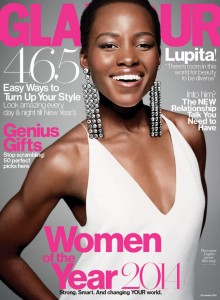
I’ve been talking with my students all semester about stance. It’s a tough concept to explain. How does a writer find the balance between argument and tone that works for the audience? This month, an article about abortion that I’ve been working on for more than two years was finally published in the December issue of Glamour magazine. And as I read over it, for possibly the hundredth time, I realized that it makes a terrific tool for talking about a writer’s stance.
I started in July, 2012 just as a new law that mandates an ultrasound before abortion and a 24-hour waiting period took effect in Virginia. The Falls Church Healthcare Center, about 10 miles outside of D.C., was generous enough to open its doors to me and allow me to interview women who were either waiting for their ultrasound or there for an abortion. I wanted to get beyond the political rhetoric and get to the voices of real women facing an unwanted pregnancy. And because I wanted to provide readers with a nuanced discussion, I headed next to a crisis pregnancy center in Norfolk, Va., where pregnant women can get an ultrasound and counseling – but not an abortion. I did the rest of the reporting by phone, eventually talking with 20 women about the ways in which the ultrasound shaped their decision about abortion.
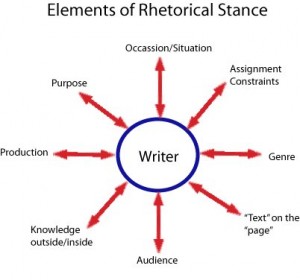 Then it was time to write, and this is where the question of stance came in. I tell my writing students to avoid the first person, that is, unless there’s a compelling reason to insert themselves into the text. My admonition to my journalism students is even stronger: they are to leave themselves out of their writing. I knew before I started my reporting that abortion is one of the most polarizing topics in our culture. But I found that even in the world of experts, there were no neutral sources to help me interpret my findings; the researchers are either for or against abortion. So it was up to me to find the middle ground. I wanted transparency. I wanted readers to know exactly how I had found the 20 women who made up my small sample. And I wanted my readers to trust what I had to say and feel that they had learned something new about a subject most of us have made up our minds about. I decided that the best way to enter into this fraught conversation was by writing as honestly as I could – in the first person. I did so sparingly, using the first person just four times. Here’s an example: “The more stories I heard, the more I could understand how both sides have become so convinced they are right.” I would describe that as a stance that’s factual, friendly and a little removed from the fray — as compelling a reason as any for writing in the first person.
Phoebe Zerwick, November, 2014


 “My time at the writing center has really shaped how I view myself as a writer, and writing in general. Everyone needs to learn how to write well–it doesn’t matter if you’re going into business, science, literature, or something else, being able to clearly express your thoughts to others is a necessity in every field. I came to realize this after encountering numerous students who would, after reading through a paper with me, shrug and say something like, “I’m going into _______ field, so I won’t need writing after this divisional English/First Year Seminar is over.” I wonder where this rumor, that writing is only needed as a correlate to studies that involve reading literature, began? Resumes, job applications, and company memos all require writing, as do scientific research papers. One of the reasons why I love writing is because it is such a flexible skill–you can literally use it for anything. As my senior year comes to a close, I cherish my time tutoring in the writing center because it taught me how valuable writing can be, and how important it is to write well, no matter where you are going in life. Although I am an English major, I am most likely not going to pursue any higher degrees in English studies. However, I know that whatever my future brings, being able to put pen to paper (or fingers to laptop keys) and write with eloquence and clarity will help me along the way.” -Catherine
 Think writing is only important for folks going into English? Think again.
 Our amazing Phoebe Zerwick (associate teaching professor in the writing program) recently had an
  What would you say are your most frequent grammar mistakes? Check out
  Still looking for that perfect valentine? According to a recent (totally unscientific) article by